Recently, to guide enterprises in conducting overseas patent layout scientifically and to enhance their capabilities in identifying, providing early warning of, and responding to overseas intellectual property risks, the School hosted the Zhenjiang Special Training Program on Overseas Intellectual Property Risk Prevention and Intellectual Property Insurance, commissioned by the Zhenjiang Intellectual Property Office. More than 50 participants attended, including intellectual property managers from Zhenjiang’s export-oriented and high-tech enterprises, research team members from universities in Zhenjiang with overseas patent application needs, and representatives of intellectual property service agencies.
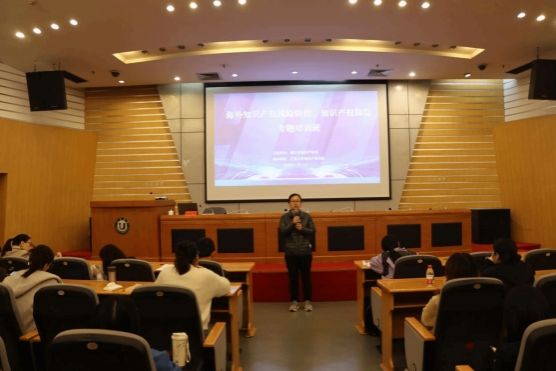
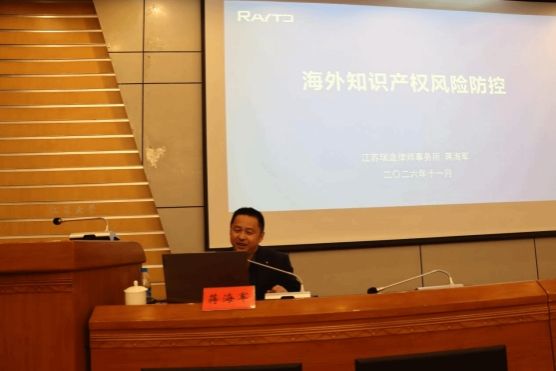
Lawyer Jiang Haijun shared insights on intellectual property risks in artificial intelligence and cross-border e-commerce in light of the new situation of overseas intellectual property disputes. By reviewing the characteristics of recent cross-border e-commerce intellectual property cases and the key points of defense in litigation, he provided practical guidance for the cross-border licensing of research results and the industrialization of technology going global. He noted that when Chinese innovators go global, they should both proactively build a patent moat and establish risk-screening and early-warning mechanisms, conduct infringement risk checks in advance, and prepare contingency plans for disputes.
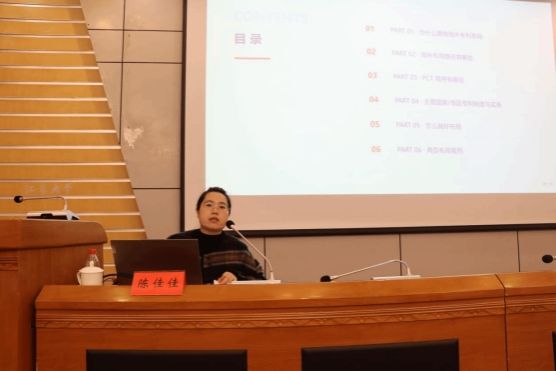
Chen Jiajia, General Manager of Nanjing Zhizaoli Intellectual Property Agency Co., Ltd., spoke on the practice of overseas patent layout. She systematically explained the three overseas filing routes — the Paris Convention, the Patent Cooperation Treaty (PCT), and the Hague Agreement on Industrial Designs — comparing the applicable scenarios, key deadlines, and cost characteristics of each route, and dissected the patent systems and practical key points of major countries and regions including the United States, Europe, Germany, Japan, South Korea, and Southeast Asia. She guided participants to conduct patent layout scientifically along three dimensions — technology decomposition, market stratification, and timing — while emphasizing confidentiality review to avoid the risk of loss of novelty, improve patent asset quality, and avoid the waste of resources caused by indiscriminate, blanket applications.
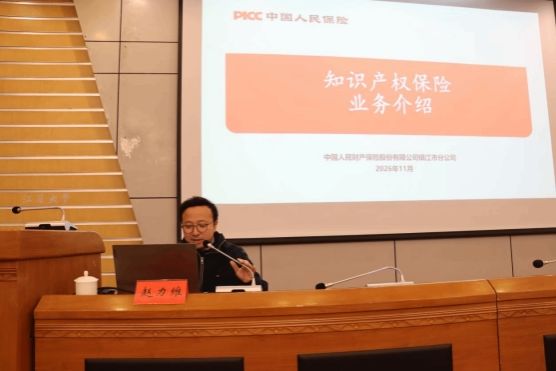
Zhao Liwei, manager of the Zhenjiang branch of the People’s Insurance Company of China (PICC), briefly introduced intellectual property insurance and related services. Using local claims-settlement examples, he showed how intellectual property insurance can convert uncertain rights-enforcement and litigation costs into fixed premiums, providing rights-defense and economic-compensation protection for research entities and enterprises going global, and offering a market-based solution for hedging intellectual property risks.
In addition, relevant business divisions of the Zhenjiang Market Supervision Administration provided a policy briefing for enterprises based on documents including the Implementation Opinions on Strengthening Overseas Patent Layout and the Jiangsu Province Intellectual Property Service Voucher Implementation Plan.
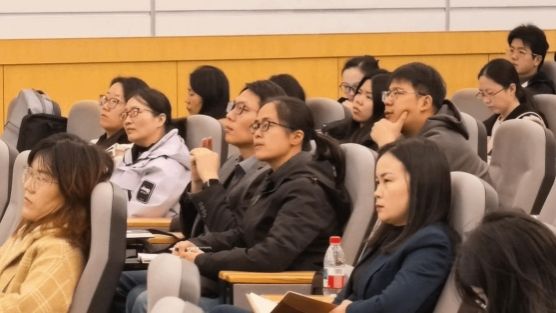
Closely aligned with the real-world needs of enterprises going global, this special training combined explanations of institutional theory with extensive review of real cases, helping participants further clarify overseas intellectual property rules and strengthen their risk-prevention mindset, and contributing to stronger overseas patent layout by enterprises and enhanced international industrial competitiveness.